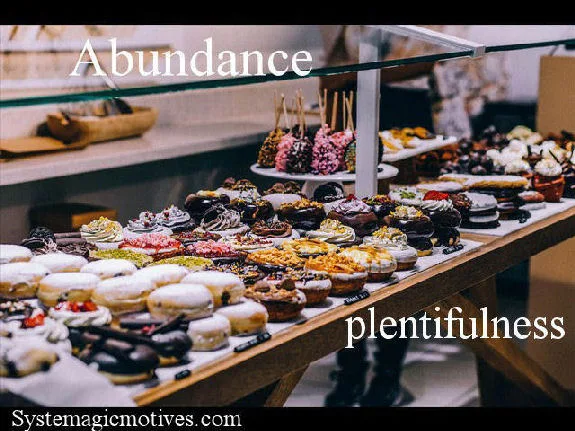
Abundance n. Plenty; a rich sufficiency of useful or valued resources.
Abundance is the condition of having more than bare minimum, not only in material terms but also in time, ideas, relationships, and possibilities. The word points to plentitude that supports growth: enough resources to create, enough stability to plan, and enough margin to recover from setbacks. In practical life, abundance can appear as fertile systems, generous collaboration, reliable tools, or steady opportunities that make progress more likely and less fragile.
Psychologically, abundance also names a way of perceiving life that widens options instead of narrowing them. When people feel there is enough to work with, they tend to make calmer choices, share more freely, and think longer-term. That does not mean ignoring limits; it means recognizing present resources and using them wisely. In this sense, abundance is both a circumstance and a practice: cultivating what is available, reducing waste, and turning sufficiency into constructive momentum.
"I try to be grateful for the abundance of the blessings that I have, for the journey that I'm on, and to relish each day as a gift."
- James McGreevey
In "masting years," oak trees can produce huge crops of acorns all at once, sometimes several times higher than normal. Ecologists call this predator-satiation: there are so many acorns that squirrels, deer, and insects cannot eat them all, leaving an abundance to germinate.
Abundance rises when the mind is clear,
And grows when steady habits steer.
It gathers softly, building more,
A quiet swell that builds the store.