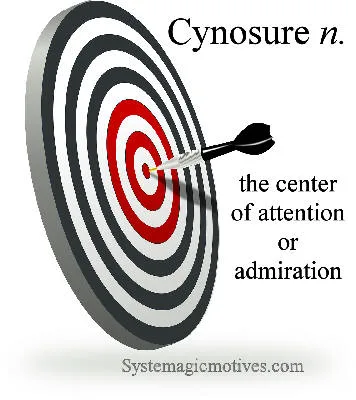
Cynosure n. The center of attention or admiration.
Cynosure is a luminous noun with classical roots and modern poetic relevance. Derived from the Greek kynosoura (meaning "dog's tail"), it originally referred to the North Star - the steadfast beacon that guided ancient navigators. Today, it describes any person or thing that serves as a focal point, commanding admiration or attention. In social contexts, a cynosure may be the quietly magnetic individual in the room or a bold symbol that centers public fascination.
More than just a word for physical prominence, cynosure carries emotional weight. To be someone's cynosure is to evoke awe and inspiration; it implies elegance, brilliance, or meaningful influence that draws others in. Within your positive adjective constellation, its inclusion adds a stellar dimension - suggesting a presence that's both radiant and grounding. Cynosure isn't just central; it elevates what it centers.
"All eyes were turned to him."
- Charles Dickens, A Tale of Two Cities (1859)
The young entrepreneur quickly became the cynosure of the business world.
The magnificent Taj Mahal is the cynosure of Indian architecture.
In 18th- and 19th-century London, certain performers at Covent Garden and Drury Lane became so wildly popular that newspapers described them as the "cynosure of the pit," meaning the entire audience physically leaned forward to watch only them. Contemporary accounts note that when these actors stepped onstage, opera glasses across the theatre all swung in unison - a literal, documented moment where one person became the focal point of hundreds of eyes at once.
Amid the crowd, a calm allure,
She stood - the night's own cynosure.
All eyes were drawn, yet none could claim
The secret of her silent flame.
Cynosures of night-
stars twinkle above still fields,
drawing silent eyes.