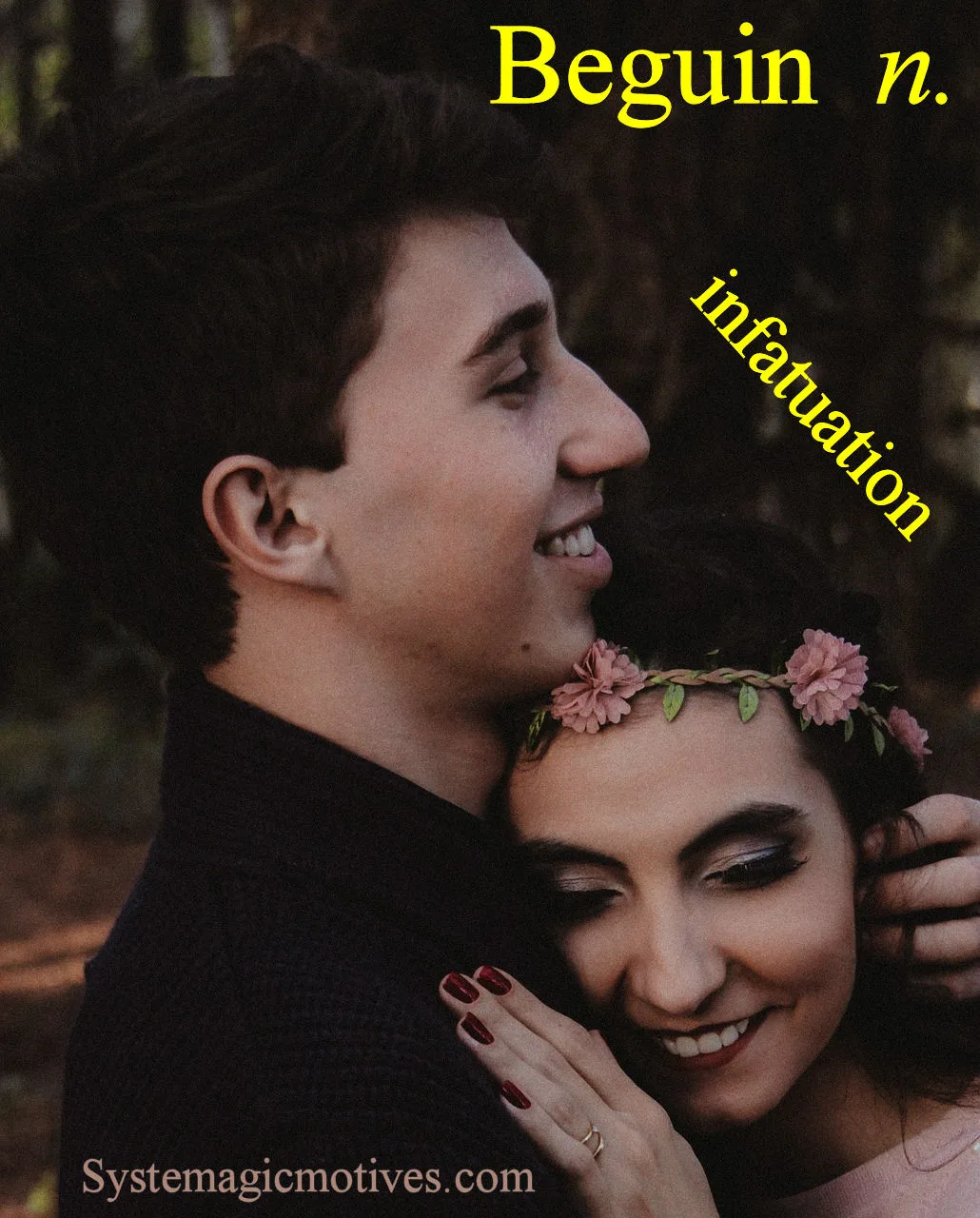
beguin n. Infatuation.
beguin names the early rush of romantic fixation: heightened attention, emotional pull, and imaginative projection toward someone new. It describes that first phase when ordinary details suddenly feel charged with meaning and the mind keeps circling back to one person. In this state, anticipation grows quickly, small gestures feel amplified, and affection can seem both thrilling and disorienting.
While often playful in tone, the word captures a real psychological phase where attraction narrows focus and intensifies memory for emotionally charged moments. beguin does not necessarily imply lasting love; it marks the vivid beginning, the spark before steadier forms of attachment take shape. As a vocabulary term, it helps distinguish infatuation from deeper bonded commitment while still honoring the energy and wonder of first desire.
"Who ever loved, that loved not at first sight?"
- Christopher Marlowe, Hero and Leander (1598)
In modern French, the phrase "avoir un béguin pour quelqu'un" ("to have a crush on someone") is one of the most common idioms for describing a light, fluttery infatuation. Because of this, English speakers sometimes borrow beguin to describe a brief, noticeable attraction - strong enough to feel, but not strong enough to be called love.
He felt a beguin rise the moment that she smiled;
A quick, disarming pull that left his thoughts beguiled.
It wasn't deep or lasting, just a spark he couldn't hide;
A new, bright fascination shining quietly inside.