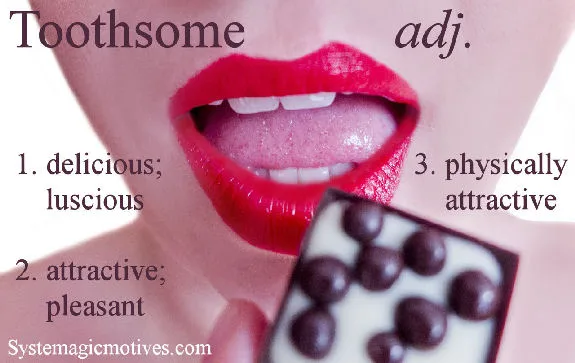
Toothsome adj. 1. Delicious; luscious 2. Attractive; pleasant 3. Physically attractive
Toothsome is a deliciously expressive word that sits at the crossroads of appetite and attraction. In its oldest and most literal sense, it describes food that is especially tempting to the taste: rich, savory, luscious, or satisfying in a way that invites another bite. Over time, the term broadened into a more aesthetic register, where it can also describe someone or something as pleasing, alluring, or physically attractive. That dual meaning gives the word unusual charm: it carries both sensory delight and visual appeal in a single syllabic package.
What makes toothsome enduring is its warmth. It does not sound clinical or distant; it feels lived-in, conversational, and slightly playful. Used well, it can elevate description without becoming ornate, whether you are writing about a remarkable meal, a captivating style, or a person whose presence feels inviting and vivid. In modern usage, toothsome still retains its old-world flavor while remaining immediately understandable, which is part of its power: it lets language be precise and pleasurable at the same time.
"People who love to eat are always the best people." - Julia Child
...Psychologists studying taste perception have found that when people describe food as toothsome-meaning richly enjoyable to chew-their brains actually show a stronger reward response than when they use more common words like "tasty" or "good." The more vivid the word, the more vivid the experience. In other words, calling something toothsome can literally make it feel more delicious.
With toothsome joys to taste,
no bite or crumb goes to waste.
It brightens moods with every chew,
with small delights that feel brand-new.