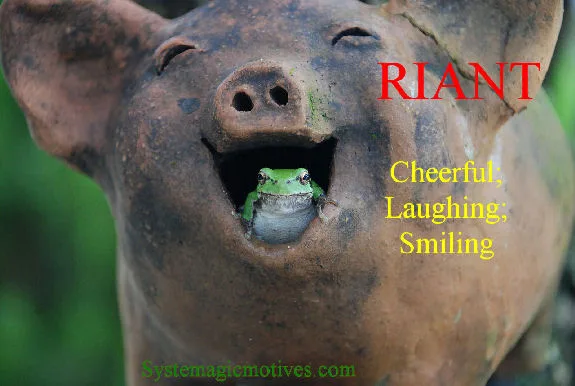
Riant adj. Cheerful; laughing; smiling.
The word riant comes from the Old French riant, meaning "laughing" or "joyous," which itself is derived from rire, meaning "to laugh." As an adjective, riant describes something that is cheerful, bright, or full of happiness. It can refer to a person, atmosphere, or setting that exudes a sense of lightheartedness and joy, evoking images of brightness, warmth, and good spirits.
In literature and poetry, riant is often used to convey a mood of gaiety, playfulness, or exuberance. It might describe a scene filled with laughter, an individual's carefree demeanor, or a landscape that feels vibrant and full of life. It carries a positive and uplifting tone, suggesting an openness to joy and the simple pleasures of life.
"The most wasted of all days is one without laughter."
- E. E. Cummings
Laughter is socially contagious: hearing genuine laughter activates brain regions tied to social mirroring, which helps groups synchronize mood and feel more connected.
A riant mood comes drifting on the breeze,
A lightness dancing softly through the trees;
It lifts the day with laughter's easy art,
And plants a little sunrise in the heart.