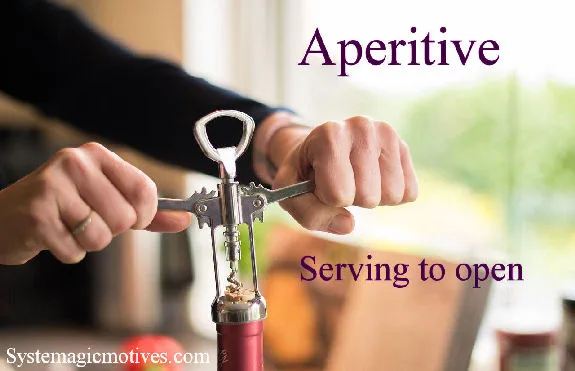
Aperitive adj. Opening the appetite; stimulating anticipation.
Aperitive describes what prepares appetite, attention, or desire before a fuller experience begins. In food culture, it often refers to flavors or drinks that awaken the palate without overwhelming it, creating a deliberate transition from ordinary pace to shared meal. More broadly, the word is useful for any thoughtful opening: the first gesture that sets tone, invites participation, and primes people for what follows. It can describe an opening paragraph that draws readers into an essay, a short musical prelude that prepares an audience for a larger work, or a warm-up exercise before a lesson. An aperitive moment is small by design, but it has real effect, because beginnings shape expectation, and expectation shapes experience.
"Wine is of an aperitive quality, opening the passages and stirring the appetite."
- John Hester, 1582 translation of A New Book of Distillations
In Renaissance and early-modern medicine, aperitive remedies were believed to "open" the body's passages gently, often to stimulate appetite or aid digestion. Physicians distinguished them from aperient remedies (mild laxatives), noting that aperitive preparations were typically infused in wine or herbs to act more subtly on the system.
Aperitive notes before the meal,
prepare the mood and taste appeal.
A modest start, a bright prelude,
that opens want, and taste and mood.