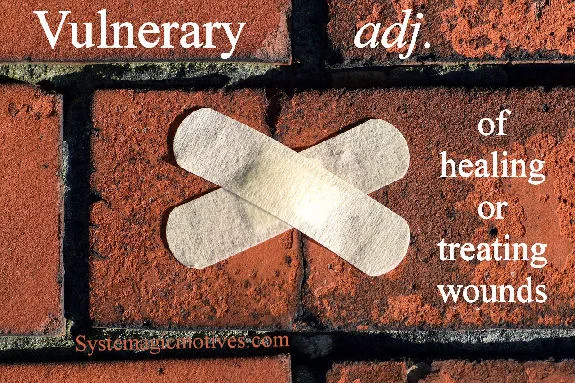
Vulnerary adj./n. Of healing wounds; also, a remedy used to treat them.
SanativeSalubriousSalutarySanatoryHygeianSustentative
Vulnerary is one of those precise old words that still carries practical power. As an adjective, it describes something used to heal wounds; as a noun, it names the remedy itself. The word points to a direct human need: not only to survive injury, but to restore tissue, function, and confidence after harm. It belongs to the language of care that is concrete, skilled, and recovery-oriented.
Its wider significance is ethical as well as medical. Vulnerary language reminds us that healing is active work, not passive waiting. In clinics, homes, and communities, vulnerary acts include cleaning, protecting, stabilizing, and supporting repair over time. The term therefore bridges body and culture: it names what helps wounds close, and what helps people return to life with strength.
"...as comfrey, bugle, self-heal, or any other of the vulnerary herbs whatsoever." - Nicholas Culpeper, The Complete Herbal (1653).
During World War I, American Red Cross surgical dressings were made with sphagnum moss as a wound-care material-an industrial-scale example of vulnerary practice in emergency medicine.
Modern field medicine can also use medical-grade adhesive (a "superglue"-type closure) for selected simple lacerations, though major battlefield bleeding is still managed first with tourniquets and hemostatic gauze.
Vulnerary balm,
Soothing touch on weary skin,
Healing soft and kind.