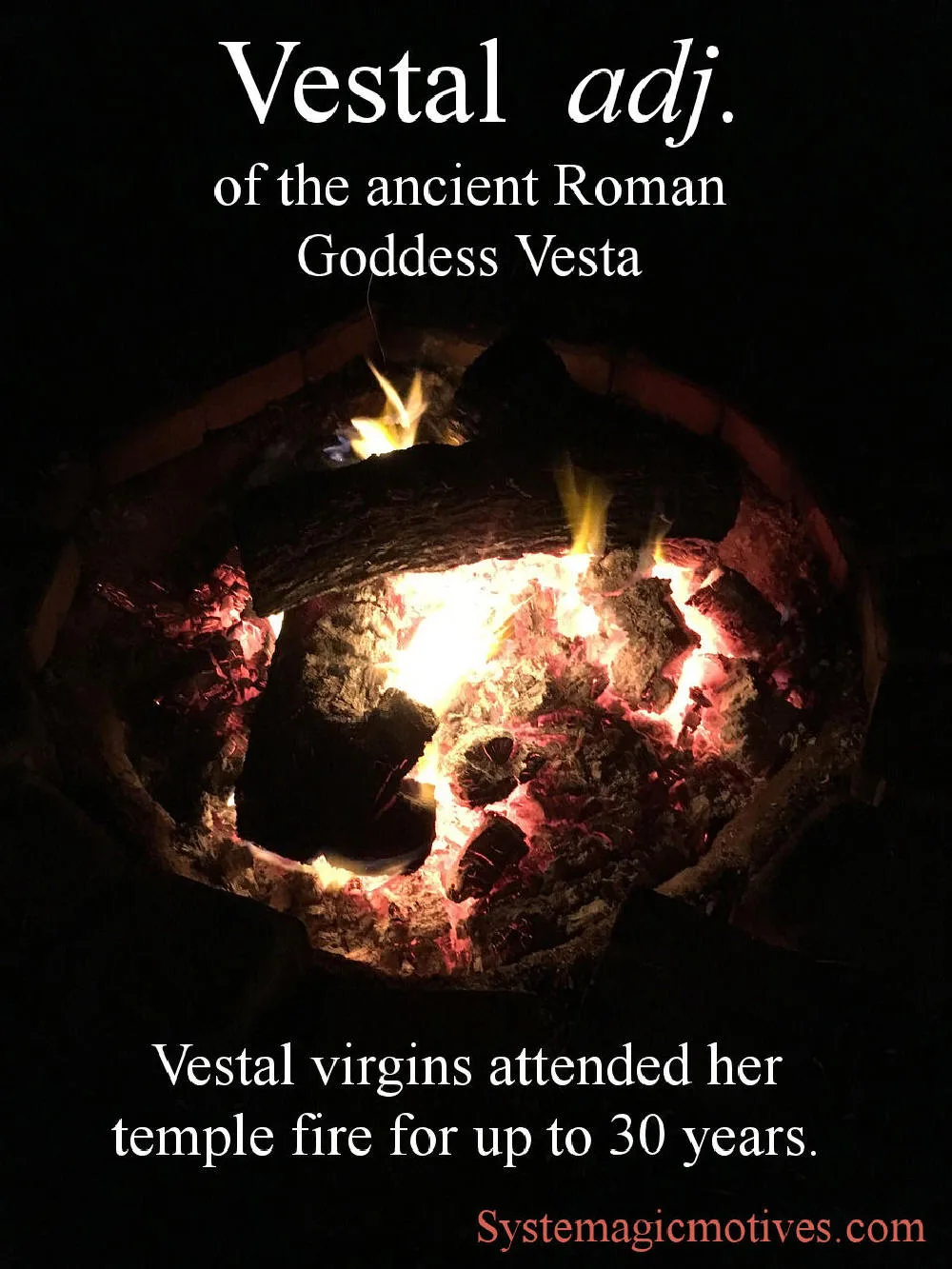
Vestal adj. Of Vesta, hearth-devotion, or sacred guardianship.
VerecundParthenianIntemerateSanctiloquentJunoesqueHaloedVenust
Vestal comes from the Roman cult of Vesta, goddess of hearth and civic continuity. In classical usage, it named a role more than a mood: disciplined guardianship of a shared flame understood to symbolize the life of the city itself. The word therefore carries themes of duty, protection, and steadiness under pressure.
Beyond antiquity, vestal can suggest a principled, watchful form of care - a commitment to keep what is life-giving intact through routine, restraint, and responsibility. In modern reading, the word can be approached less as social control and more as civic symbolism: the long work of tending what many people depend on.
"How happy is the blameless vestal's lot! / The world forgetting, by the world forgot." - Alexander Pope, Eloisa to Abelard (1717).
The Temple of Vesta's sacred fire was not decorative; Romans treated it as a state-security symbol, and its extinction was considered a national danger-sign.
That made vestal practice an early form of civic ritual infrastructure: a spiritual system used to stabilize public morale and political continuity.
Vestal flames burning,
Silent in the moonlit breeze,
Sacred peace endures.