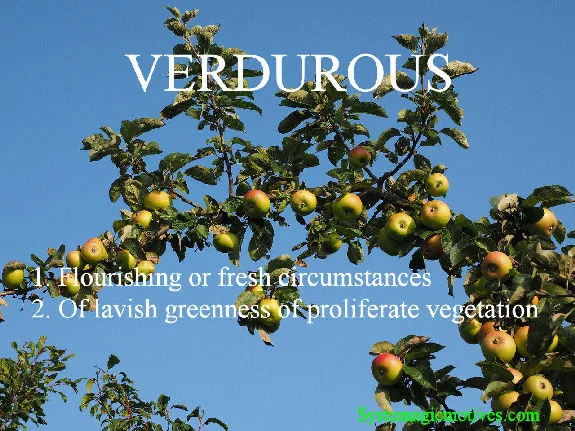
Verdurous adj. 1. Flourishing or fresh circumstances.
2. Of lavish greenness or proliferate vegetation.
Verdurous is a word steeped in the imagery of thriving green life. It describes not just the color of vegetation, but the sense of lushness, fresh growth, and the quiet vitality of places where nature is fully awake. To call something verdurous is to evoke leaves thick with chlorophyll, moss softening stone, meadows in their prime, or any landscape where green is not merely present but abundant and renewing. The word carries a gentle, almost restorative energy-suggesting environments that nourish, replenish, and remind us of the earth's capacity to flourish.
The word verdurous unfurls as a lush expression, painting landscapes with the vivid hues of green vitality. This term, with its verdant essence, brings forth images of flourishing meadows and thriving foliage, evoking a sense of natural abundance and freshness. "Verdurous" captures the vitality of life, summoning the rejuvenating energy found in verdant expanses. It conjures scenes of thriving ecosystems and flourishing flora, encapsulating the positive spirit of growth and vitality that nature generously shares. The word itself becomes a poetic tribute to the ever-renewing beauty of the natural world.
"Green is the prime color of the world, and that from which its loveliness arises." - Pedro Calderon de la Barca.
Satellite vegetation maps use greenness indices (like NDVI) to track plant health, drought stress, and seasonal growth cycles across entire regions.
So a "verdurous" landscape is not just poetic language: in earth science, greenness can be measured, mapped, and compared over time.
Verdurous whispers,
Leaves greet the sun's warm caress,
Life's green symphony.