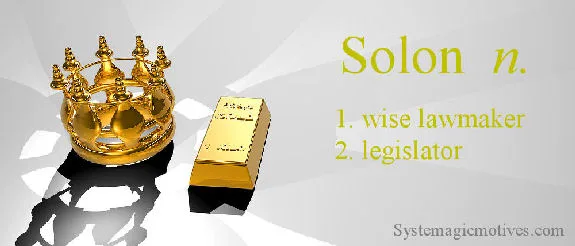
Solon n. 1. Wise lawmaker. 2. Legislator.
Solon is used as a personal noun for a wise lawgiver, a thoughtful public reformer, or a legislator known for judgment rather than spectacle. The word comes from the name of Solon of Athens, the 6th-century BCE statesman remembered for legal and civic reforms that helped stabilize Athenian society. Over time, his name became a model term: to call someone a solon is to credit not merely intelligence, but practical wisdom in matters of law, governance, and shared civic life.
In modern use, solon can describe anyone who frames policy with foresight, balance, and moral seriousness. It suggests a person who weighs consequences, protects social cohesion, and writes rules meant to serve the common good rather than short-term factional gain. The word carries a classical gravity, but its meaning is still current: communities continue to depend on leaders who can unite principle with workable action.
"Divide and rule, the politician cries;
Unite and lead, is the watchword of the wise."
- Johann Wolfgang van Goethe
One of Solon’s most famous reforms in Athens was called the seisachtheia, often translated as the “shaking off of burdens.” It canceled debt bondage and helped free citizens who had been trapped by impossible obligations. His legacy became so strong that, centuries later, his name itself turned into a word for a wise lawmaker.
A solon weighs what laws should do,
with steady mind and wider view.
Not loud with haste or passing spin,
but wise in what abides within.