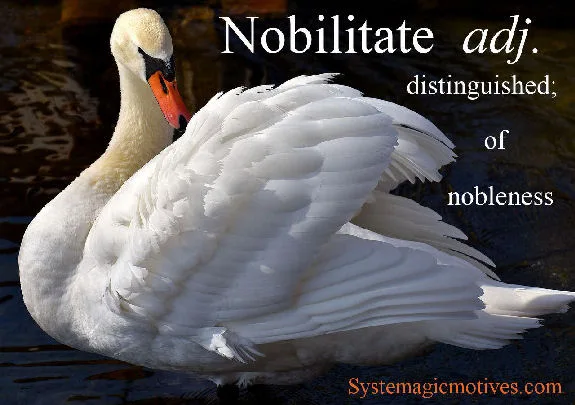
Nobilitate adj. Distinguished; of nobleness.
v. 1. to make someone a noble 2. to dignify or exalt someone or something.
The word nobilitate comes from the Latin nobilitare, meaning "to ennoble" or "to make noble." It refers to the act of granting nobility, whether in a literal sense-such as bestowing a noble title-or in a figurative sense, by elevating someone's character, reputation, or status. In historical contexts, nobilitate often relates to the process by which individuals or families were raised to noble ranks, either through royal decree, acts of valor, or distinguished service. This form of social elevation was common in monarchies and aristocratic societies, where noble status carried significant privileges and responsibilities.
Beyond hereditary or formal nobility, nobilitate can also describe the process of elevating something morally or intellectually. A noble deed, for example, can nobilitate a person in the eyes of others, bringing them honor and respect. In this sense, nobilitate is not merely about titles or birthright but about cultivating virtues like integrity, courage, and wisdom. It signifies a transformation toward greatness, whether through external recognition or internal refinement.
"Virtue is the truest nobility."
- Miguel de Cervantes
Across legal history, ennoblement often served as a recognition system for public service, converting demonstrated contribution into social trust, responsibility, and formal civic role.
To nobilitate the soul,
one must rise and take control.
Honor, kindness, wisdom bright,
lift the heart to noble heights.