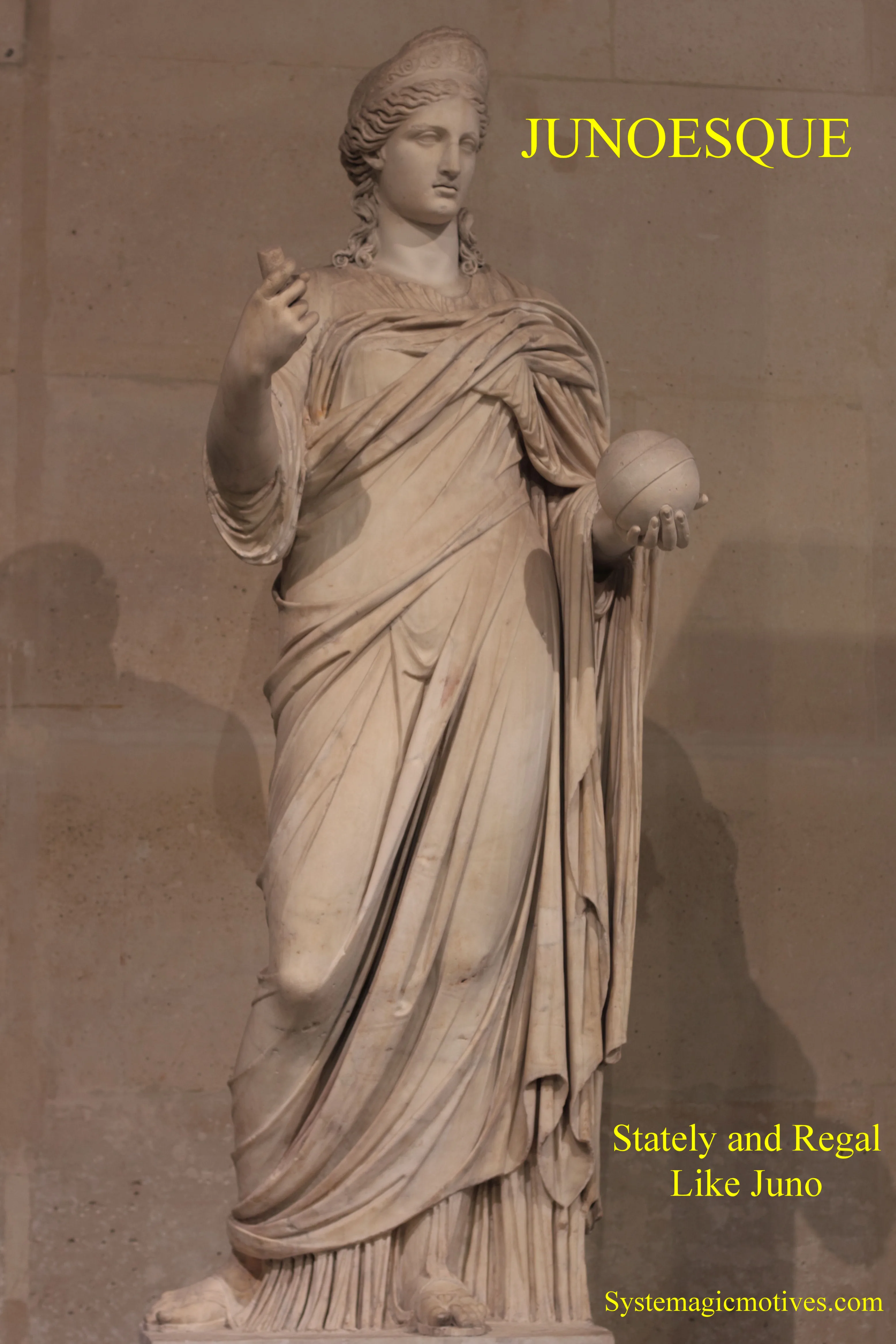
Junoesque adj. Stately and regal like Juno.
The term "Junoesque" is derived from Juno, the Roman goddess of marriage and queen of the gods. Known for her majestic and regal demeanor, Juno was often depicted as a powerful, statuesque figure. As a result, the word "Junoesque" came to describe women who possess an impressive, almost goddess-like beauty and stature. It conveys an image of grandiosity and grace, often highlighting a physical presence that commands attention and admiration. Unlike the typical connotations of beauty, which may suggest delicateness or fragility, Junoesque beauty is robust, dignified, and awe-inspiring.
In contemporary usage, the term retains its classical roots while being applied in a more generalized context. To describe a woman as Junoesque is to acknowledge her extraordinary presence, strength, and elegance. This descriptor is less common in modern conversation but continues to evoke the timeless qualities associated with classical beauty and power. It's a tribute not just to physical attributes but to an overarching sense of regality and poise.
"She was tall, and her figure was Junoesque."
- Henry James, The Portrait of a Lady (1881)
In art history, the descriptor junoesque has often been used for portrait subjects whose posture and gaze project authority as much as beauty.
Junoesque in bearing, calm and bright,
she holds her ground with measured light.
No borrowed grace, no passing guise,
just steady strength before our eyes.