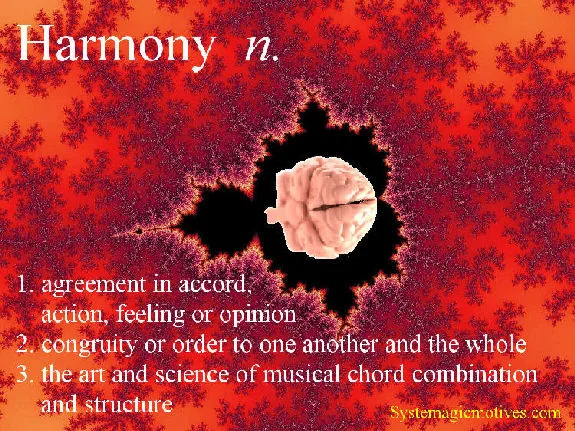
Harmony n. 1. Agreement in accord, action, feeling or opinion.
2. Congruity or order to one another and the whole.
3. The art and science of musical chord combination and structure.
Harmony names the condition in which different parts work well together without losing their distinct character. In human terms, it can mean agreement in intention, conduct, and relationship. In structural terms, it means proportion, fit, and coherence, many elements arranged so the whole is stronger, steadier, and more beautiful than any single part alone.
In music, harmony is literally the architecture of combination: notes sounded together to produce tension, release, resonance, and depth. That musical sense illuminates the broader one. Harmony is not sameness. It is coordinated difference. Voices remain themselves, yet join in patterns that create intelligible order. This is why the word is equally at home in ethics, art, and community life.
"Out of discord comes the fairest harmony."
- Heraclitus
When musicians sing or play in harmony, their breathing and heart rhythms often synchronize within minutes - a measurable physiological alignment that shows harmony isn't just a musical idea but a real, observable coordination of bodies working together.
Harmony gathers many voices near,
and blends them into liquid good to hear.
Not sameness, but a balanced, living art,
each note its own yet coming from one heart.