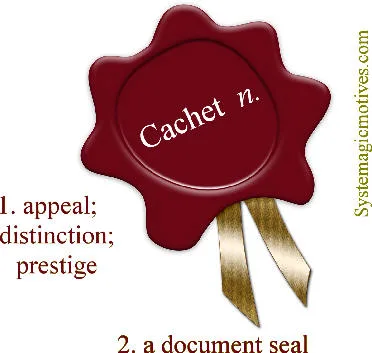
Cachet n. Prestige or distinction that confers value.
Cachet names the kind of distinction that makes something instantly recognizable as trusted, refined, or high-value. It is not just popularity or visibility; it is a reputation earned through consistency, discernment, and standards people come to respect. A person, institution, or work with cachet carries a subtle authority: others assume care, craft, and credibility before a single detail is explained.
The word entered English from French, where cachet originally referred to a seal or stamped mark used to authenticate origin and status. That history still shapes modern meaning. Today, cachet suggests a symbolic stamp of esteem conferred by sustained quality, selective association, or proven excellence. In practice, cachet influences perception powerfully: it can elevate trust, sharpen identity, and turn ordinary recognition into lasting regard.
"Quality means doing it right when no one is looking."
- Henry Ford
Behavioral economists have found that true cachet-the kind earned through consistent quality or integrity-creates a "reputation halo," where people unconsciously expect better outcomes from anything associated with it. In other words, real cachet does not just impress others; it actually changes how their brains evaluate what you do.
Real effort builds cachet in quiet, steady ways,
A shine that slowly gathers through the work of many days.
It's earned when you stay constant in the duties you pursue,
And hold your course with purpose when the easy way won't do.