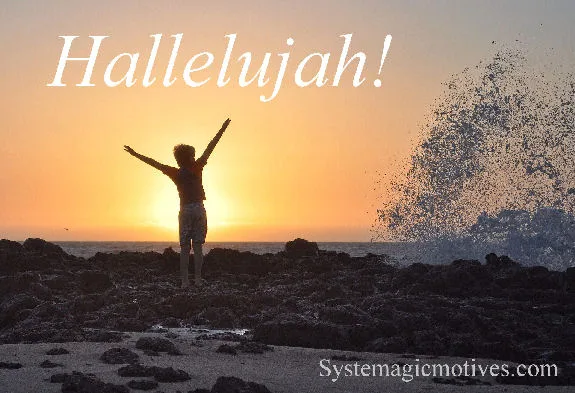
Hallelujah! int. A joyful cry of praise, relief, or exaltation.
Hallelujah is a jubilant cry of praise, gratitude, and relief, used when ordinary language feels too small for what the heart wants to express. It appears in sacred music, poetry, and everyday speech wherever a moment feels touched by wonder, breakthrough, or deep thankfulness. The word carries both celebration and release: the joy of something good arriving, and the easing that follows strain.
In modern use, hallelujah works as a living expression of uplift. People say it after hard-won progress, after help arrives, or when beauty unexpectedly breaks through the noise of the day. Its force comes from shared recognition: a collective yes to joy, hope, and meaning. That is why hallelujah still feels timeless, whether whispered in quiet gratitude or sung out loud with full voice.
In linguistics, exclamations like "hallelujah" are classified as "interjections of elevation," because they momentarily raise vocal pitch and breath pressure, giving the speaker a small physiological lift.
"Hallelujah! he said in a high-pitched voice."
- James Joyce, Ulysses, Episode 12 ("Cyclops"), 1922.
Hallelujah in the open air,
for burdens eased and answered prayer.
A lifted voice, a joyous cry,
where earthbound hearts remember sky.