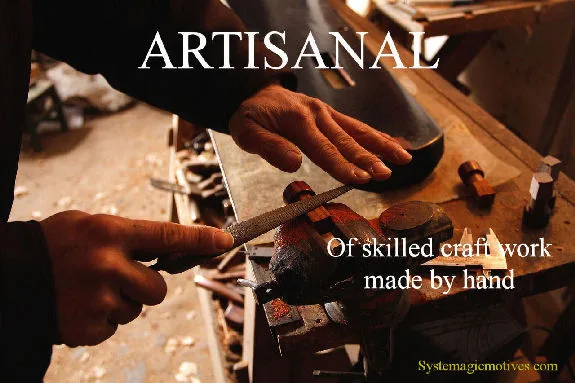
Artisanal adj. Crafted skillfully by hand, with care and tradition.
The term "artisanal" refers to products made with a high level of craftsmanship and attention to detail, often emphasizing traditional methods and handmade techniques. Derived from the word "artisan," which denotes a skilled worker who creates goods by hand, "artisanal" is used to describe items crafted with a focus on quality, originality, and uniqueness. This term is commonly applied to a range of goods, from foods and beverages to crafts and textiles. Artisanal products are typically distinguished by their use of time-honored methods and the personal touch of the creator, contrasting sharply with mass-produced items that prioritize efficiency and uniformity.
In the food industry, "artisanal" has become a popular descriptor for products like cheese, bread, and chocolates that are made in small batches using traditional techniques. For instance, artisanal cheeses are often produced using age-old recipes and methods that may involve manual processes, such as hand-stirring curds or aging in specific conditions. This emphasis on craftsmanship not only enhances the flavor and quality of the product but also connects consumers with the rich history and skill behind its creation. The term "artisanal" thus signifies a dedication to preserving culinary traditions and elevating the experience of consuming high-quality, thoughtfully made foods.
Beyond food, "artisanal" is increasingly applied to other areas where handcrafted quality is valued, including furniture, textiles, and personal goods. In these contexts, the term underscores the effort and expertise invested in creating unique, one-of-a-kind items that stand out from mass-produced alternatives. Artisanal goods often carry a sense of authenticity and individuality, reflecting the maker's personal touch and artistic vision. As consumers seek more personalized and meaningful products, "artisanal" has come to symbolize a broader movement towards appreciating and supporting craftsmanship and tradition in a wide array of industries.
"Craft is the visible edge of art."
- David Bayles
Before industrial milling became widespread, many European towns had strict rules requiring bakers to stamp their bread with a unique mark so customers could identify who made each loaf. These marks functioned like early "artisanal signatures," and some families kept the same symbol for centuries, passing it down as part of their craft identity.
Artisanal grain,
handcrafted with loving touch,
each detail refined.